
Tuesday, August 25, 2015

Interview: Seventh Seal

[indiessance]
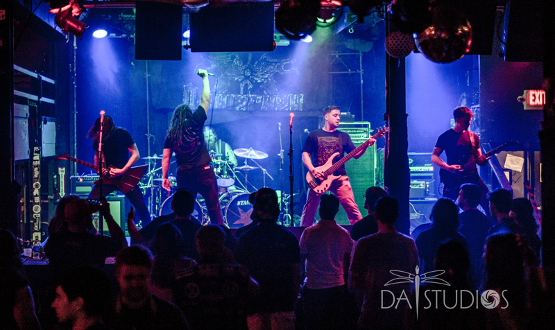
During a 98 ROCK interview Josh, Alden and Tim covered the band's 2009 hiatus—which had nothing to do with time off. A sonic reconstruction project followed the departure of two guitarists who moved on to pursue other projects. Then Alden and Jarred restored the missing guitar section. Replacing main guitarists of a metal band must be akin to subtracting from, then adding to a chemical composition.

Considering that Jarred is a former guitarist of Anubis Unbound. And Alden's guitar playthrough demonstrates how he attacks Ghost. Seventh Seal made an awesome band member exchange.

Which key technical aspects affected the band's post-2009 metallic reformulation? For example, as the new sound crystallized, did Alden make any specific equipment changes or style changes? In the 98 ROCK interview, Josh mentioned how tracks were recorded in a home studio, then sent out to be mixed. Facts like that carry interest. And what about technical transformations of vocals, bass and drums? How is SS doing things differently now, as compared to pre-2009?

[Josh]
Man, that's an awesome and insightful question! The years between 2009 and 2014 were very transformative in so many ways! I've also been working on another project called Vestascension, and I was actively exploring other ways to use my voice during that time. I feel that that exploration really changed the way I approach vocals and song writing in general. In the older material, the vocals always kinda came last, after writing out the guitars and the rest of the music. During this writing process, they definitely happened in tandem, and in some cases the vocal writing actually effected the way that the final songs were orchestrated.

To record the vocals, I did a ton of research and decided to buy a decent preamp, and a couple good microphones. Then, I just recorded all of the vocals at my house on nights and weekends. Once I had a good set of takes that I felt deserved to be on the record, I'd send out demos to the guys via email, and they'd give me feedback on everything. I'd usually make a round of revisions to the vocals depending on what they thought, and then I'd send them all off for mixing. It was nice because we all decided to work this way eventually. Since we had access to all of our own recording gear, we could work out ideas, send them to the group for review, and then revise them and iterate on them based on the overall feedback.

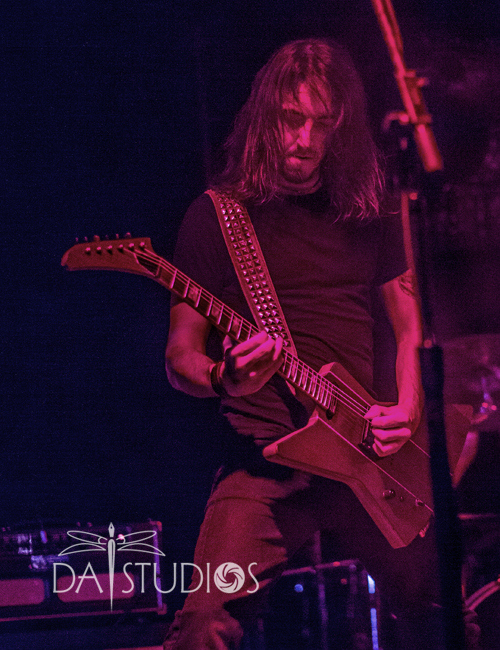
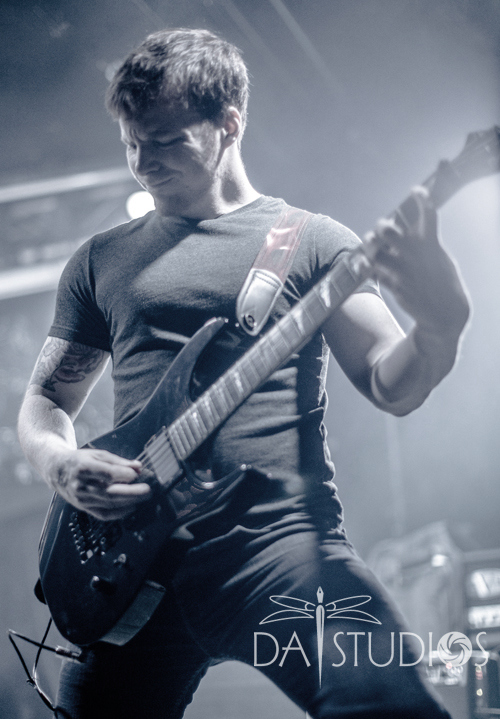
The guitar approach, and transformation is kinda interesting. Alden and I wrote most of the guitars on this album, while the other parts we didn't write were leftover riffs and parts that had been worked through with previous guitarists. I think we were able to establish a decent chemistry by writing huge chunks of the album together in a room. The writing process was extremely iterative as we'd refine the songs and parts from week to week. We're hoping to involve Jarred more in the writing process moving forward, by the time he joined up with us, about 98% of the guitars were finished for the record.


[Alden]
Yeah, the combination of riffs and ideas that went into this album…it's pretty crazy, actually. Joe and Justin (previous guitar players) recorded the guitars on the songs Black Skies and On This Day, so when I joined the band in 2010, we had two fully completed songs and then just a totally blank page to write the rest of the album however we saw fit. There were existing riffs and demo ideas that we modified, changed and put our own individual spin on, riffs that had been floating around in Josh's head for years and had never been committed to a song, and of course we wrote tons of all new riffs and ideas and mixed it all together. I think that the album flows incredibly well, but when you think about the time that passed between completed songs, and the different people and styles that went into creating them…it's kind of amazing that it all fits together as well as it does.

In terms of the overhaul of guitar players and the change it brought, of course that was a huge alteration to the chemistry and sound of the band. I feel that Seventh Seal has always had a very strong guitar identity throughout the years, and the great thing is, everyone who has ever played in this band put in a lot of effort to find their own sound and to bring something unique to the music. Jarred and I are a very different guitar duo than, say, Joe and Justin were. But this band has gone through changes with every new release and every new chapter, and no two guitar players in the group's history have ever really been alike. So, while losing two guitarists at once back in 2009 was absolutely a heavy change, and could have easily been a killing blow for Seventh Seal, I think it was just another opportunity to welcome a whole new style and sound all over again and start fresh. I think that, after I joined full time, and we spent a few weeks going over ideas, we all felt this huge excitement, this feeling that we had total freedom and could go in any direction we wanted. The band went through a complete evolution.

I have huge respect for every past member of this band, and I'm just very happy to now bring something different to the table in my own way. Jarred and I are having a blast live, and I really appreciate your compliments, too.


[Tim]
As far as drums go, this album was my first time on a Seventh Seal record! We ended up capturing MIDI from my performances on a Roland e-kit, and utilized ToonTrack's Superior Drummer for the sound and mixing. It was the most convenient way for us to track and edit these drum parts, and keep everything sounding consistent, since we were writing and recording so much of the material at various stages.


[Josh]
Tim's actually a founding member of the band! He's played on and off with the us over the years, but this is the first time he's actually on a record. Having played with him so much over the years really helped with the chemistry of writing as we worked through all the material.

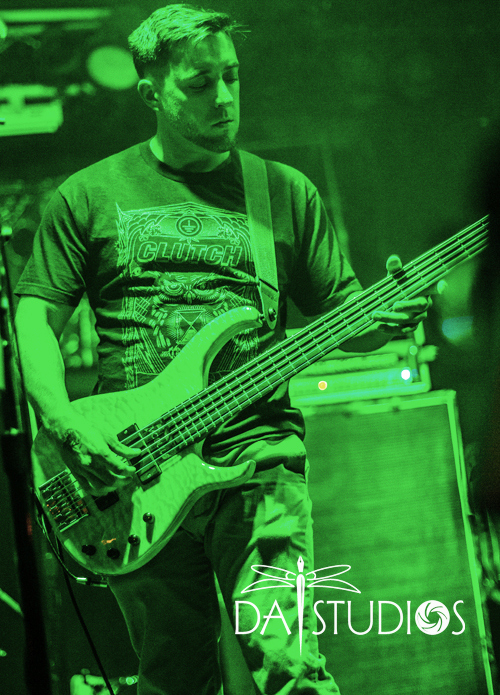
For bass, Nate just killed it! He always does, and he pretty much had free reign to do what he wanted. I still remember the first time I heard what he tracked for Interlude... there is just so much emotion in that take!

After everything was recorded, we decided to send the tracks out to Drew Mazurek, mainly because he's an absolute beast when it comes to mixing, but also to have another ear that wasn't involved in the tracking to mix the record.


[Alden]
Drew's involvement was one of the main reasons we were able to have these songs fit together into a cohesive album, I think. He really helped to glue the album and the overall sound together.


[Josh]
Overall, I think we tried to push ourselves as much as possible with our playing and writing on this material, while not losing the song. I think too often, it's easy to get caught up with technical details of playing which can lose the feel and emotion behind what you're trying to convey. We're really happy with how it all turned out.
[indiessance]
The symbolism of ghosts as our former selves is used in the lead track. The Seventh Seal home page reads:

The central theme of the album focuses on the changes we face and live through during our time here - The Ghosts Of What We Are, in this case, representing the shadows of our former selves that still resonate within us, even as we continue to grow. Deeds, feelings and memories that follow us through our path in life, both haunting and encouraging us along the way.5

SS has gone through a transformation during the last five years which included leaving its former identity behind. In that sense, could the ghost metaphor also apply to the band as a collective self? And were there any individual experiences that might relate the metaphor?
[Alden]
Absolutely. The years leading up to us releasing this new album were quite heavy in a lot of ways, emotionally. In 2010, I lost the most important person in my life, 7 months after joining Seventh Seal. My entire meaning and life changed in an instant. I've never been the same since and that's a very powerful part of who I am. A lot of time passed during the writing of this album and I know we all went through highs and lows, which in turn affected our creativity in different ways of course. So, for me, the themes in the album are actually incredibly accurate to the things that we were dealing with while writing and recording, both as a band and as individuals.


[Josh]
Definitely. In 2009, when we were looking at really deciding whether or not to continue, I finally really saw how much this project means to me personally. Over time, it became apparent to me that I really needed to continue making music in Seventh Seal, if for no other reason, then to just keep creating. The metaphor seemed to work so well, on so many levels, it was almost creepy! The amount of change that took place in the band and in our personal lives really helped to drive our creativity while making this album.

[indiessance]
In July, Seventh Seal performed at a Noise in the Basement show; at the well-known Ottobar venue.

Since its inception in 1997, the Ottobar has consistently booked up to 100 local and national bands a month, primarily in the rock/punk/rap genres. The club is well known around the country...6 [international bands as well]

With thirty days to work with, it seems amazing that one venue could maintain such a breakneck pace. While 98 ROCK was also plugging shows, and NITB was booking them.

One Baltimore music blogger reminisced, It was awesome hearing Isomorph live again. Which gave me the impression that SS has a good number of fans who remained loyal. Is that something Baltimore fans are known for? With that kind of support, how has the band's return from its hiatus gone? Including 98 ROCK's contributions. What experiences has the band had with fan response since its return?
[Josh]
The Ottobar is such an amazing Baltimore venue! And having Noise in the Basement there on a regular basis was something that we were truly lucky to have access to.


[Tim]
Baltimore has been a great city to be based in. The music scene has been good to us over the years. When some of our fans found out that we got together to test the waters, the excitement started to brew. It's been overwhelming the support our fans have given us. It reminds us of why we play music.


[Alden]
The Ottobar is awesome. That place has such a vibe and atmosphere to it, and I think Baltimore has a really strong and passionate local music scene. There are a huge variety of styles and a lot of really talented musicians around town, and to have had the support from Matt Davis and 98 Rock the way we did for so long, it was a huge opportunity for all of the bands who were trying to get something going. Noise In The Basement was the top local music event for Baltimore bands for years, and a lot of us wouldn't be where we are without it.

I think our fan base is really great. We've made a ton of new fans with this latest album, but a lot of people have stuck with Seventh Seal throughout our various changes and styles over the years, too, and that means so much to us. And I'm really happy that we played Isomorph at the last show, too. That song closed the majority of Seventh Seal shows for YEARS, so it's about time we played it! We've been pushing the new material so hard since releasing this album, so this was actually the first time I performed an older Seventh Seal song with the group.
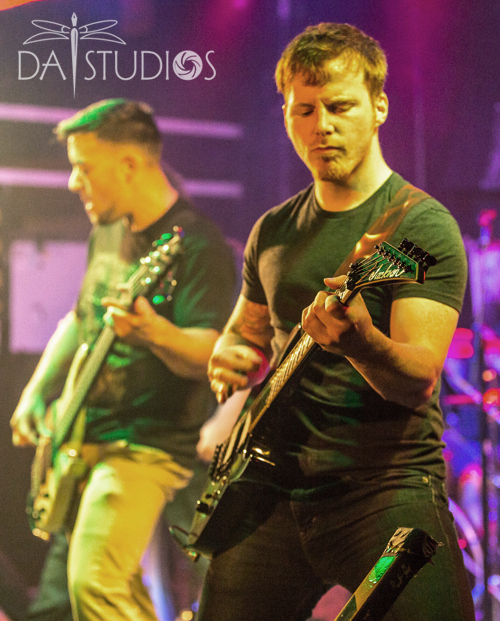

Seventh Seal: Ghost


Maryland-based Seventh Seal's The Ghosts of What We Are (2014) represents experimentation in metallurgy involving the re-formulation of musical style including progressive elements. While some heavier metallicity remains as a vestige of their traditional sound.

The album's first minute features a hollow spacey guitar effect; setting the stage of an empty haunted house. Suddenly silence is busted up by percussive bursts of violent flashbacks. The A-side, Ghost, becomes a visceral metaphor for introspection. Our former selves never leave; they nobly transform, as tribulation's destructive bricks become character's building blocks. Flesh submits to its curse, but the essences of men—their ghosts—develop perseverance to overcome.

The shadows of what I used to be follow me
The ghost inside of my heart and mind still believes1

Seventh Seal - THE CROWN Studio Report - Drums
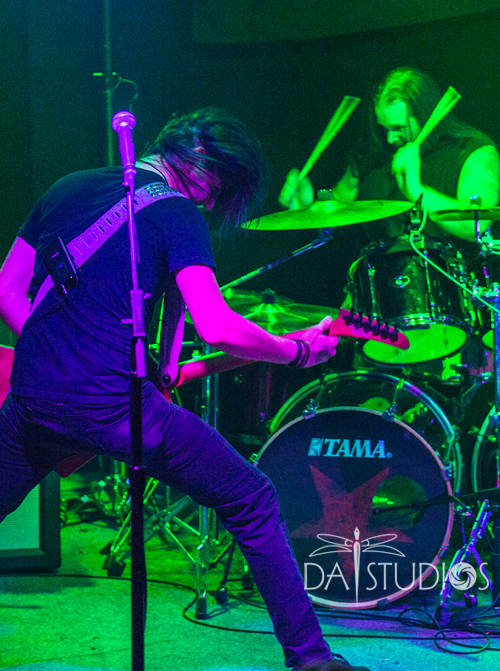

The metaphorical ghosts are the shadows of our former selves that still resonate within us, even as we continue to grow. Deeds, feelings and memories that follow us through our path in life, both haunting and encouraging us along the way.2

There is a idiosyncratic relationship between formulaic songwriting and the subconscious minds of its listeners. Sound which deviates too far from its recognizable pattern becomes an unknown, but if it feels too commercial, again, listeners mentally tune out. So songwriting evolution always involves bending genre structures to maintain a balance between entertainment, and that deep resonation listeners feel when a song drops into the right groove. If bands continue to finesse their sonic transformations, existing fans keep tuning in.

Write down the rules of formulaic commercial songwriting as you know them...then break them—BLAM!—one by one.3

When hearts are activated and musical code is deposited like fertile metal seeds, a song can grow on listeners with each replay. Songs fans collect in the future relate to songs they liked in the past. Because of the listener's subconscious recollection of the motifs and pattern of earlier themes, to which he refers the new theme as he hears it.4 New favorites subconsciously refer back to the first songs he heard.


Seventh Seal Tour Dates

  1. Seventh Seal (band). Ghost. 2014. Album: The Ghosts of What We Are. Recording. Track #1
  2. Seventh Seal (band). The Official Seventh Seal Website. 2014. Web. www.seventhsealband.com
  3. Aschmann, Lisa. 1000 Songwriting Ideas. 2008. Milwaukee, WI: Hal Leonard Corp. Print. p.44
  4. Cook, Nicholas. A Guide to Musical Analysis. 1994. Oxford, UK: Oxford University. Print. p.113
  5. Bradstock, Alden. Seventh Seal: The Official Seventh Seal Website: About Seventh Seal. 2014. Frederick/Baltimore, MD: Seventh Seal. Web. [http://www.seventhsealband.com/] Accessed: 2015-09-12.
  6. Tilghman, Mary K. Insiders' Guide to Baltimore. 2008. Guilford, CT: Globe Pequot. Print. p.127

The Ghosts Of What We Are

1. Ghost (05:01)
2. On This Day (04:40)
3. Awaken (05:05)
4. Consecrate (05:47)
5. Interlude (01:55)
6. Black Skies (04:55)
7. A Life Apart (04:55)
8. Hollow (02:08)
9. Change (04:16)
10. Pariah (07:36)
11. War (04:54)
12. Save / Breath / Shine (07:15)

Saturday, August 22, 2015

The Steakhouse Demos: Raytheon Hymn

The Steakhouse Demos (2012) is down-to-earth until ears reach the fourth track which literally takes off on a fiery fountain. Raytheon Hymn becomes a vertical departure from the band's alt-country tracks; inspired by the progressive sci-fi space rock of Planet P Project and the aeronautics of Space Center Houston. Considering another Steakhouse offering titled Western Stars, it seems as if their songwriter often lifts his eyes to the stars for inspiration. Another source was David Bowie: Ground Control to Major Tom—the most well-known fictional astronaut.

Awake all night I drive out to the launch pad
I'll be 50 miles downrange of base by the time you rise
My back to earth I ride that fiery fountain into endless night1


Blasting off involves an anti-Earth attitude by default; an anti type of attitude with altitude, let's say. If this globe was so great, why do our best and brightest keep shooting men into orbit? To the moon; maybe Mars. While scientists keep searching for habitable planets, as if mankind has planet-hopping planned. Another line from Raytheon mentions Ernie Kovacs, who might be considered an anti-television personality by virtue of his black-and-white departure from the norm.

The fan mail preserved in the Kovacs Papers suggests that Kovacs fans saw themselves as a minority audience of what we might call anti-TV TV watchers—people who watched only certain shows that they felt were entirely different from the rest of TV.2

  1. Sullivan, M.; Black, R.; Schultzberg, R.; Albright, O. Raytheon Hymn. Steakhouse. Steakhouse, 2012. Raytheon Hymn | Steakhouse. Web. 29 Aug. 2015. (http://steakhouse.bandcamp.com/track/raytheon-hymn).
  2. TV by Design: Modern Art and the Rise of Network Television. . Chicago, IL: University of Chicago. Print. p.200


The Steakhouse Demos

1. Western Stars (05:11)
2. Las Cruces Days (04:23)
3. Laughter (05:54)
4. Raytheon Hymn (04:20)
5. Hands (03:42)

Saturday, October 1, 2011

Rue Royale


Groningen House Show (Ham Radio Communications)
photo by: Roland Kok
[indiessance]
the first Rue Royale song I ever listened to was the eponymous Guide to an Escape, which is clearly a grower—I like it more and more with each replay. and the background echo loop, which at first almost seemed out of place, instead merged into the mix like an essential ingredient—through out the song it carries a subtle sense of urgency. an escape. while the rich haunting piano chords then became a backbone of apprehension. Guide reaches deep.


I thought about how you both covered tens of thousands of miles touring Europe, and how you must depend on one another. also, in a sense I suppose, touring itself can be considered as an escape, as a songwriting duo pursues a creative dream. with that in mind, do you each serve as a guide to the other in a sense? but that question comes from a new fan's impression. could you please describe to me the real meaning of Guide to an Escape, how the inspiration for the song came about, and really, what it means to your hearts, because it sounds like a song that poured out of a heart.

[brookln]
Guide to an Escape (the song) is about stealing away from the journey we so often otherwise sing about. The journey to do the right thing, find peace or truth if it exists, reconcile the way we were raised with the way we now see the world, etc.. I am consumed by insecurity and questioning and am not one to settle easily. To the degree that it's exhausting, difficult and gets in the way of finding the peace I so desire. Guide to an Escape was written in a season where the fatigue was winning, peace was far and I was longing to not care about any of this journey but to rest.


[ruth]
In response to your comment about us touring so many miles and serving as each others guide: I feel like touring is an emotional journey full of highs and lows and with a lot of stressful and stretching times. We rely on each other for support constantly and yes in some ways guiding each other through great times and hard times as one can often be in a very different place to the other and needing a voice of reason and balance in the midst of this. Brookln is definitely the driving, visionary force for the band and I tend to rely on him for this as I can be a very slow mover who dwells on things for far too long.

Guide to an Escape by Rue Royale


[indiessance]
I liked the music video you did with Amsterdam Acoustics; how the neighborhood background activity blended with your performance of the song Blame, which can also be found on your latest LP, Guide to an Escape.

in one of your press releases, I found the statement: It’s all about the journey, not the destination. There the duo was in the Netherlands, next you were in Germany. how has touring, which has taken you all over the world, helped you advance as musicians, and also as people? what have become your favorite places to perform? can you talk more about this musical journey, which has taken place on both sides of the pond?

[brookln]
Touring has changed so much about us. Everything from our vocabulary and our taste buds to our preference of music have been informed by all of this globe trotting. Musically we've been inspired by the rooms we've played in, the weather and geography we've driven through and picnic-ed in and the bands we've met and listened to along the way.

[ruth]
I feel we have had our eyes opened wide and our minds too as we have travelled so much and met so many people with such different stories and history. This has been life changing in the most extreme way and to be honest I feel we are still processing these past few years.. it will take a while to get through all we have experienced.. maybe even our whole lives! We love performing in many places and in many different venues. We love house concerts still but also enjoy playing the festivals. Wherever it is we really appreciate being with people who take the time to listen to our music and support us on this journey. We have met many musicians too who have also played a part in our story, with inspiring tales of touring and with their own musical journeys. There seems to be a sense of community with some of these musicians and people and this plays a huge part in our story as they provide us with support and friendship on the road..

[indiessance]
thank you very much for sharing your thoughts, and may you be blessed over and over—over the road.


Guide to an Escape

1. Guide to an Escape 04:07
2. Halfway Blind 03:36
3. Flightline 03:11
4. Get me Standing 03:58
5. Blame 04:06
6. Knocked Back to the Start 03:20
7. Crater 03:37
8. Meant to Roam 04:31
9. We'll Go on Alright 03:57
10. Foreign Night 04:10
11. The Search and Little Else 03:00

Saturday, November 28, 2009

Interview: CLAPS


[indiessance]
The new CLAPS EP is slated for January; this will be your first release through the Guilt Ridden Pop label. I have been listening to the A-side track Fold – which carries on the minimal wave, electronic music movement. You must be excited about the new synthpop track – what kind of response have you been getting from fans? And could you give us some background on Fold? Also, could you tell us more about the whole EP? You informed me that additional mixes will be included for fans like me – more bang for our bucks. :)


[Jed]
We've been sitting on a lot of our songs and are excited to finally have them recorded. We've gotten a pretty good response, most people seem pretty excited about it.


[Patrick]
Fold was one of the first songs we wrote, its changed a lot over the last six months and I'm happy to see where it finally ended up. It was one of the songs we always had liked and had fun playing but we never felt it was where it was meant to be. When we were recording it, it finally came together and clicked. The EP is called New Science. It has three tracks, Fold, Fireworks and Gruzzles. We think all three have their own characteristics that represent us, to some extent. We also are including a couple of remixes. At this point, we are still working out them out, but we have a couple of talented people who have said they are interested.


[Sara]
It's also cool that a lot of fans are people who really don't listen to this type of music, and some fans are like major minimal synth lovers. We get compared to a large kinda weird variety of bands because of this..


[indiessance]
I just learned about Veronica Vasicka, the founder of the Minimal Wave label, and the work she has been doing for the genre since she started the label in 2005. Being based in New York, I imagine she cultivates some interest in order to draw more fans. Are there any radio stations, record stores, fan clubs, etc. in the band's home city of Minneapolis that are devoted to, or supportive of, minimal wave? How did you get involved with the genre? Did you basically get hooked on New Order and such, to then take that enthusiasm a step further – because just being a fan was not enough? :)


[Jed]
In Minneapolis, there isn't a direct club or store for minimal wave. There are only a handful of people who are interested in the genre, that we know of. I guess, our band got into the genre with more popular bands like New Order, early Depeche Mode, early OMD, and John Foxx. From there, I don't know, speaking for myself, I got into more obscure minimal synth stuff. I found the minimal synth site and I listen to a lot of the bands on there and from other sources.


[Sara]
I probably got hooked on synth pop from living with you two...


[Patrick]
We do have more influences beyond that, but minimal synth is a huge one. In a lot of ways, growing up we were into punk music to an extent, which years ago lead me to post-punk music and I suppose I've always seen synth music as a sibling of post-punk.


[Jed]
People can say its happier stuff, but its still inspired by the same ideas and still comes from punk rock.


[indiessance]
On your MySpace profile, you cite Joy Division/New Order as a musical influence. The hit Love Will Tear Us Apart makes it evident that punk rock influenced and energized the post-punk genre. Along with the jangly guitar and punkish drums, the listener can hear the texture of the emergence of synthpop. Can you talk about bands that have helped shape CLAPS' sound? I also see OMD, John Foxx and Suicide on the list. Can you talk about your favorite songs and/or band members of your musical influences – who else might you add to that list? What other people in the scene have been a help – any particular producers, etc.?


[Jed]
For me, I pull a lot of influence form obscure minimal synth bands. Most I've found online. That and synth music from the late 70's until 1983. Other than that, I've listened to punk rock since I was kid. And well, maybe some video game stuff, like Megaman.


[Sara]
If I'm thinking about anything when writing its probably OMD and newer stuff like Grizzly Bear, Lil Wayne and Beach House. Its a mix of older and newer stuff.


[Patrick]
I got really into pop music in the last year. The CD player in my car broke and half of the time all I have is mainstream radio. I'd love to say that doesn't really influence me. But it made me rethink a lot of what I was writing. It made me appreciate hooks. So much pop music today is not focused and not very substantive, where good pop has some merit to it. I love songs that stick with you for more than one reason. More than just a concept or a catchy line, but some instrumentally or something more than that sticks in your head. I can't necessarily name that thing...it's hard to explain. But on top of that, I love synth pop and post punk music.


[Jed]
When we were looking for someone to record with we decided to work with Ryan Olcott. He's produced some other electronic acts and has done other electronic music himself. Working with him has been really helpful in directing our sound and has been a good asset for bouncing ideas off of. That and Guilt Ridden Pop has been good for us.


CLAPS Links:
MySpace
Facebook
Guilt Ridden Pop
Fold on YouTube


New Science

1. Fold 03:20
2. Gruzzles 03:08
3. Fireworks 03:52
4. Fold (Chic Portier Remix) 03:37
5. Fold (Busy Signals Remix) 04:10
6. Fold (Soviet Panda Remix) 06:12

Saturday, August 1, 2009

Interview: Eleonora Cutaia


Eleonora Cutaia founded AheadPR - a digital music promotion service.

[indiessance]
In a djsounds.com interview, you talked about how you keep your ears open for artists who do not necessarily fit into a specific genre, and are not afraid to experiment with new sounds. Considering how dynamic the many subgenres of electronic music have been, how does your business philosophy reflect the dynamic nature of digital music?


[eleonora cutaia]
At AheadPR indeed we receive the most diverse submissions and it is important to be 'objective' when evaluating the products. Even if I have a personal taste in music, thankfully I am able to go beyond the taste or genre factor, and rate music for the way it's produced, and for the potential it can have with the media and public.

[indiessance]
As it is essential for AheadPR to remain on top of current music trends, what are a few of the main media sources that you have come to rely upon in order to keep informed? What are other ways that you keep informed?


[eleonora cutaia]
When it comes to new music trends, I do not make it an obsession but I definitely try to allow myself to be exposed to different channels and outlets. Most of the times it's the music that finds me!

AheadPR helps a great deal as it allows me to regularly discover some extremely talented artists via the site submissions.

Running the label is another great asset as again, some great artists come to me through recommendation or word of mouth.

There is just so much music out there that it's literally impossible not to miss out. I guess this is one of the reasons why AheadPR is becoming increasingly popular: journalists and DJs can be a bit more lazy and rely on a trusted source to filter up quality content for them!

[indiessance]
Recording artists have emailed me MP3s that they produced with home recording equipment. They have their own web pages, blogs, MySpace profiles, etc. But few artists get the kind exposure that would take their sound to the next level. How can AheadPR help such independent recording artists and labels?


[eleonora cutaia]
The most important thing is the music to be produced to good standards. These days thanks to some great software, it has become so easy to reach professional standards even from the comfort of your home. You are right saying there are tons of artists who are trying to do everything themselves, but only a few ones get solid exposure.

With so much choice out there it is becoming even more difficult, so it definitely requires some budget to actually make some waves.

I am happy to have created AheadPR with these types of artists in mind, and it's great seeing the difference the campaigns make to them.

From magazine reviews, international radio airplay, licensing to labels, bookings: I have seen it all happen and I really do share in the artists' achievement.

I have seen some of my American clients coming to the UK for gigs, and they were over the moon, thinking it would have never happened so fast. It is unbelievable what an email to the right person can do!


Thursday, April 23, 2009

kgmr


k, singer/songwriter for her band kgmr, gives us some background on her latest project This Happened.

This Happened is something of a variety show. Songs were written by Bob, David, or myself, or we co-wrote songs. Jon Mendez is playing drums to our guitars and Rhodes piano. It is also something of a clearinghouse of songs that were on the recorder that didn't fit the themes of Migrate to Carnivora or the Half Ass Family Band's self-titled album. There are instrumental songs and songs with words, songs with samples of other random things like tapes of vintage film strip narration, heavy guitars and noise sometimes and sometimes a very clean sparse sound. It just kind of happened and was big fun in the making.

Mall Song started out as a song with words, and it was very catchy to jump around to. I decided the words got in the way of that and took them out. But the lyrics were about hating the mall, essentially, and had lines like
they like the lipstick Ripe Cherry Pinprick.


[indiessance]
According to Wikipedia, slowcore is a subgenre of "alternative rock that developed from the downbeat melodies and slower tempos of late 1980s indie rock." The subgenre can also be referred to as sadcore, which is known particularly for songs with melancholy lyrics that are based on minor keys. In a review of the album Long Division by the band Low, the reviewer referred to slowcore music when stating that each sound reminds you of the silence it replaces. For example, that statement could refer to the extra space between notes in the melody, which could also be a function of the tempo, I suppose.

Your album Migrate to Carnivora could be categorized as slowcore music by the presence of negative sonic space. As a classically trained pianist, you have gained a composer's sense of sonic space. Considering how musically dense classical music compositions can become, did you go through a process of musical deconstruction for the development of kgmr's minimalized compositions? What steps led to the development of your current sound?


[kgmr]
When I was a young kid I wrote soundtracks for imaginary horror movies on my portable Magnus organ and Casio keyboard. I was into minor keys and dissonance even then. I also had a lot of strict, intense Classical training. More recently, in the late nineties, I acquired a Fender Rhodes piano. It basically presented itself to me, and I had no idea what I was going to do with it. The Rhodes, because it's a mechanical instrument, naturally deconstructed things. Playing the Rhodes opened up a whole new sound and new techniques, which I explored on my previous album, instant confidante. That album is mostly instrumental, except for two songs, creepy and strange and monsters and robots. Those were the first two songs I ever sang in my life, and Migrate to Carnivora evolved out of those songs, basically. Because of the lyrical content and singing on this album, I wanted it to sound washed out, spaced out, and somewhat surreal. So this album is not nearly as minimalist as instant confidante.

In terms of the idea of sonic space, for me, a single chord can go a long way. I tend to play chords that I have to later figure out what kind of chords they are, because they're not your straight up C or G chord. Although I do play simple chords too. But the more muddy chords can sound very dense and complex, which makes their sound go a long way and forces space to follow. Just like in a conversation, if you're not saying much, you can babble on indefinitely, but if you really have something to say, something that's going to hang there, it takes sonic space.

[indiessance]
Slowcore is well represented by bands such as Low, Codeine and Red House Painters. Are there any particular slowcore artists who may have influenced your sound? Are there any such bands that you like?


[kgmr]
Oh no! I have to admit now that I've never listened to any of those bands. I probably need to now, right? Lyrically I've been influenced by Ed Vedder. Getting back to chord structure and space in the melody, Bill Evans and Thelonious Monk have been influential. I can't think of any particular rock bands that I've been influenced by. Some things in rotation at my house these days are Mum, Deerhoof, Cleo Brown, Trans Am, The Sea and Cake, and one of my all-time favorite albums called, Moorish Music of Mauritania.

[indiessance]
Has any particular classical music influenced your sound? Who is your favorite classical period composer?


[kgmr]
I like the 20th century composers, particularly Bartok, Satie, Debussy. I would say a lot of Chopin[mp3: Prelude No.4] is Classical sadcore! He wrote a lot of his music while he was sick, and that definitely comes through in his sound.

[indiessance]
The musical style of Migrate to Carnivora could also be categorized as minimalist - a category that can extend beyond music, to art in general. Current minimalist music clearly breaks down the complexity of today's popular music by default. Did you decide to develop a minimalist style of composition as a statement against popular music complexity?


[kgmr]
My style is what it is, for better or worse. Most popular music is boring to me, and actually hurts my ears the way noise and dissonance hurt some people's ears. I love noise and dissonance. I don't really think much about what my music will sound like, or what it should sound like. But if I succeed at making some music that isn't boring, I will have reacted to popular music in a way that I would like to.

[indiessance]
In the lyrics to the song titled Joy, on your latest album, the chorus repeats the line "deep disturbing joy". In a sense, there is a dissonance between the connotations of "joy" and what might be considered "deeply disturbing". As a result, that line feels like a stronger hook. Was that the effect you originally intended to achieve? Could you explain the general meaning of the song, and the chorus? What does Migrate to Carnivora mean?


[kgmr]
The chorus from Joy comes from a poem by Colorado poet/environmentalist/eccentricist Rita Clagett. The poem goes like this:
Subtle Things

Some such subtle things
 can't be captured
Anything on sagebrush -
 drops of melted snow before they drop to snow,
 morning shadow of a cat, grey on silver green,
  purring, chin rolling in my shadow hand
And others -
 mountains making clouds,
 the deep disturbing joy of owning all my troubles.
"Deep disturbing joy" is definitely dissonant for me, but like most dissonance, it sounds good and true to me. Most of my songs are amalgamations of many things, and they usually also come together musically in pieces, too. But the song is basically about knowing and accepting yourself, "owning your troubles", and realizing that you may be the only person in your lifetime who truly understands you. Depending on how deep your troubles run, finding joy in that can seem disturbing to some.

As for the album's title, at first I was going to name the album Carnivora, but then I found out a metal band from Norway has an album with that name. Migrate is the first song and Carnivora is that last song, so the album is that journey from beginning to end. Carnivora is a scientific term referring to a certain grouping of animals that eat meat, like lions and bears. The song Carnivora has a lot of meat references and analogies. But I first came across the word in Out of Africa, where Isak Dinesen used it to glowingly refer to the young native women at a dance on her farm. I can't do justice to Dinesen's words, but she's expressing a lot of power, freedom, and beauty. And I mean the word in that way, too. For an album about love and loss, Carnivora in Dinesen's usage is especially meaningful to me.

[indiessance]
Regarding its history, and how it mechanically produces sound, The Rhodes piano is interesting - certainly a different breed of piano. Along with your Rhodes piano, what other musical instruments do you use to flesh out your sound? Are there any particular electronic effects that you like to use? guitar pedals?


[kgmr]
Most of the songs on this album started at the acoustic piano. I start some things on the Fender Rhodes, and I also have a Kurzweil keyboard. I'd like to write some songs in the future starting on my bass. I'm definitely not scared to use effects, both on the piano sounds and on the vocals. Especially for this album, when I wanted the whole thing to feel thick, dreamy, and foggy. The guitar was a huge part of accomplishing that. I can't say enough about Bob Read's guitar style and how intuitive and multi-talented he is at helping to achieve the sounds I want. This is what he has to say about his guitar effects:
All the guitar effects were recorded real time, and were created by a Gretsch Super Axe run through a RAT pedal, crybaby, volume and DOD dual delay that after twenty years has begun to give up the ghost. The amp is a Fender Quad Reverb.


At some point, the singer-songwriter decided to replace her band name with an anagram based on the four initials of her full name - kgmr. You may also refer to her as k. She impressed the brevity of her band name.
All four names are important to me, but to use all of them would be way too long.
I also asked k if the existing URI hyperlink referenced the correct Cleo Brown.
Yes, that's her. I used to live in Colorado and I wish I had known of Cleo Brown then. I would have figured out what church she played organ for and sat in the back of the church to listen to her. I doubt she's around anymore.


Links


This Happened

1. Xyron Boggs Homemade Motorcycle 02:58
2. TheProcess 02:29
3. Mall Song 01:02
4. Xyron Boggs 02:03
5. Now I'm Flying High Like a Birdie 00:43
Copyright © 2016 Indiessance